
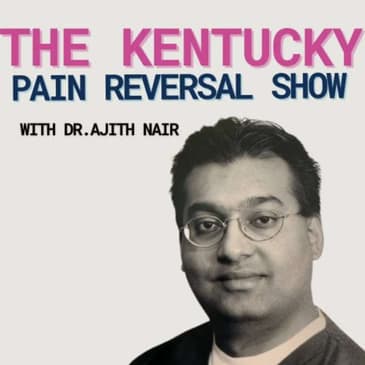
Welcome back to the Kentucky Pain Reversal Show, where we explore the latest breakthroughs in pain management. In this episode, Dr. Nair takes us beyond traditional treatments like pain pumps, spinal cord stimulation, and nerve ablations to spotlight the emerging field of peripheral nerve stimulation (PNS). Imagine a device smaller than a matchstick, placed precisely near a nerve, that can quiet pain at its source, no major surgery, no medications, and no spinal rewiring required. Today, you’ll learn why Dr. Nair believes PNS is the wave of the future for a wide range of pain conditions, how this innovative technology works, what it means for chronic pain sufferers, and why it could change the standard of care in Kentucky and beyond.
Get ready for real stories, expert insights, and a look at how targeted nerve stimulation is transforming lives and reducing reliance on pills and surgery.
Timestamps:
00:00 Peripheral nervous system explained
06:07 Understanding diabetic neuropathy treatments
08:32 Understanding nerve fiber stimulation
10:49 Peripheral nerve stimulators for pain
15:43 Discussing spinal cord stimulators
18:02 Peripheral nerve stimulation procedure benefits
21:20 Peripheral nerve injury treatment
26:20 Describing the trial procedure
29:01 Peripheral nerve stimulation explained
31:43 Evaluating patient eligibility criteria
37:12 Rise of peripheral nerve stimulators
39:04 Pain relief options in Kentucky
Peripheral Nerve Stimulation: The Future of Pain Relief Without Pills or Major Surgery
What is Peripheral Nerve Stimulation (PNS)?
In a remarkable episode of the Kentucky Pain Reversal Show, Dr. Ajith Nair introduced listeners to the cutting-edge world of peripheral nerve stimulation. Unlike many traditional pain relief treatments, PNS targets pain right at its source using a device smaller than a matchstick, offering a minimally invasive alternative to pills and major surgery.
Dr. Ajith Nair explains that our nervous system can be divided into the central nervous system, which includes the brain and spinal cord, and the peripheral nervous system, comprising the nerves branching throughout the body. PNS harnesses this network by delivering mild electrical impulses directly to the peripheral nerves, effectively blocking pain signals before they even reach the brain.
Why Peripheral Nerve Stimulators Are a Game-Changer
One of the standout insights from the episode is Dr. Nair's enthusiasm for PNS's capacity to revolutionize pain management. He illustrates how conditions like diabetic neuropathy, knee injuries, and even chronic headaches can benefit from this technology. Patients with diabetic neuropathy, for example, often experience burning pain and pins-and-needles sensations in their feet. Traditional drugs like gabapentin and Cymbalta often provide only minimal relief, but PNS can directly stabilize damaged nerves in the affected region.
[PNS] can also help those suffering from post-surgical pain, such as mastectomies, thoracotomies, or hernia repairs, and even pain following chemotherapy or crush injuries. The flexibility of targeting specific nerves makes this therapy suitable for a wide variety of conditions.
How Peripheral Nerve Stimulation Works
According to Dr. Nair, PNS operates on the gate-control theory of pain. This principle, introduced by Melzack and Wall, reveals that stimulating certain nerve fibers can effectively "close the gate" to pain signals, limiting the amount of painful impulses that reach the spinal cord and brain. By placing hair-thin electrodes near the injured or problematic nerve, electrical stimulation selectively reduces abnormal pain transmission.
The procedure itself is minimally invasive, often requiring only a small incision under local anesthesia or moderate sedation. Most patients are up and about the same day, with little to no downtime, which greatly increases its accessibility. In addition, PNS devices can be either temporary or permanent, and the process always begins with a trial to ensure the patient responds positively.
Key Benefits for Patients
One of the most transformative aspects of PNS discussed in the podcast is its potential to drastically decrease the need for opioid medications and other painkillers. Dr. Nair shared inspiring patient stories where individuals experienced dramatic reductions in pain and an improvement in their ability to function, work, and enjoy life without heavy reliance on drugs. PNS not only tackles pain but also supports a clearer mind and better cognitive functioning, since patients are able to decrease or even stop medications that typically cause drowsiness or confusion.
Who Makes an Ideal Candidate?
PNS is not suitable for everyone, and Dr. Nair emphasizes careful patient selection. Patients with uncontrolled infections, skin damage at the implant site, or those unable to temporarily stop certain blood thinners may not be ideal candidates. He also recommends achieving stable blood sugar control in diabetic patients prior to considering PNS, to minimize the risk of infection and optimize healing.
The Future of Pain Relief
Looking toward the next few years, Dr. Nair expresses confidence that PNS will become a first-line option for chronic pain sufferers, potentially preceding more drastic surgical interventions like back surgery or spinal fusions. The technology behind peripheral nerve stimulation is evolving rapidly, promising safer, more effective, and less invasive pain relief options for people in Kentucky and across the globe.
Peripheral nerve stimulation is shifting the paradigm in pain management, offering hope and improved quality of life for those who have suffered for too long. As Dr. Nair concludes, the future of pain care is not just coming, it is already here.
Podcast Website - https://thekentuckypainreversal.com/
Dr. Ajith Nair Clinic - https://kentuckianapainspecialists.com/
Media Partner - https://tophealth.care/