
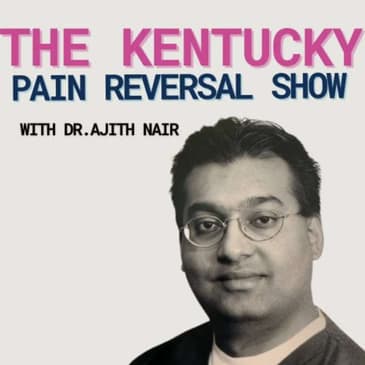
Welcome to the Kentucky Pain Reversal Show. In today’s episode, we take a step back to examine the broader chronic pain and opioid landscape in Kentucky. Chronic pain has become not just an individual struggle, but part of a larger story shaped by medical, cultural, and economic forces. We’ll explore how the current system of pain management closely tied to long-term medication use developed, where it stands today, and what’s often missing from the conversation about real solutions. Joined by Dr. Nair, we’ll shed light on the evolution of opioid prescriptions, the impact of state interventions, and why pills remain the default for so many despite alternative options. This isn’t about blame; it’s about clarity, progress, and forging new paths forward in pain management for Kentuckians.
00:00 OxyContin's impact in Kentucky
06:53 Accessing and prescribing opioids
09:01 How opioids affect the brain
11:58 Understanding tolerance and dependency
16:00 Understanding opioid prescription practices
18:03 Why pain pumps are underused
20:54 Wrapping up with Dr. Nair
Understanding Kentucky's Chronic Pain and Opioid Landscape: Insights from Episode Five
On the latest episode of The Kentucky Pain Reversal Show, host and expert guest Dr. Ajith Nair tackles a subject deeply intertwined with Kentuckians’ stories: chronic pain and opioid dependence. Their conversation strikes a balance between history, policy, medicine, and the real struggles behind long-term pain management.
The Roots of Opioid Dependence in Kentucky
The episode opens by zooming out to a big-picture perspective. Kentucky’s opioid crisis isn't just about individual choices; it’s an outcome of systemic forces set in motion decades ago. Dr. Ajith Nair traces the origins back to the 1970s and 80s, when Purdue Pharmaceuticals introduced OxyContin, touting it as a safe and effective painkiller with minimal side effects. As Dr. Ajith Nair explains at 02:37, many doctors, especially in rural areas like Eastern Kentucky with limited access to specialist care began prescribing these powerful medications widely.
This wasn’t a story of reckless prescribing; most physicians genuinely wanted to help people, especially coal miners and others with physically demanding jobs. Lacking other resources, narcotics became the default response to pain. But, as Dr. Ajith Nair notes, the lack of awareness around opioid dependency risks allowed misuse and abuse to spiral, propelling Kentucky into the top ranks for opioid-related overdoses and deaths 03:55.
How Policy and Economics Shaped the Crisis
When authorities finally recognized the issue, legislative responses, such as prescription monitoring curtailed access to legal opioids. However, reduced supply at pharmacies fueled demand for illicit drugs like carfentanil, an illegal and highly potent form of fentanyl 06:14. This shift complicated efforts to reverse the crisis, as users turned to dangerous street drugs once prescriptions dried up.
A poignant insight from Dr. Ajith Nair is how Kentucky has applied funds from pharma lawsuit settlements toward rehabilitation programs and support for those in need 04:24. While overdose rates remain troubling, these measures are helping to move the trend in the right direction.
The Pill-First Approach: Why It Persists
Why do pills remain the default for chronic pain management despite mounting awareness of their risks? Dr. Ajith Nair points to several factors. Opioids are readily available; a prescription often only requires a pain complaint 07:01. Most physicians act out of compassion, aiming to relieve suffering quickly. However, the biology of opioids means patients build tolerance and dependence with remarkable speed sometimes in as little as 90 days 16:00.
As Dr. Ajith Nair describes, opioids trigger dopamine release in the brain, creating a short-lived sense of well-being and reinforcing the desire for relief 09:12. Over time, doses escalate, prescriptions multiply, and patients may face withdrawal when trying to cut back. Distinguishing dependence from addiction is crucial: the latter drives patients towards risky behaviors like doctor shopping or illegal drug use, while the former centers on uncomfortable withdrawal symptoms and dosage escalation 12:30.
What We're Missing: Interventional Options
Perhaps most revealing is Dr. Ajith Nair’s frustration that alternative treatments, like pain pumps and spinal cord stimulators—are rarely discussed, even among medical professionals 18:14. These interventions offer targeted relief with fewer side effects and lower risk of dependence, yet lack of awareness, education, and familiarity keep patients and providers stuck in a cycle of pills.
The convenience of popping a pill and the quick relief it provides often overshadows concerns about tolerance, dependence, or eventual addiction. Many patients don’t realize better options exist until their pain management story has become a crisis 19:48.
Moving Forward: Systems, Not Blame
The episode closes with Dr. Ajith Nair underscoring that Kentucky’s opioid challenge isn’t the result of any single group’s choices, but the outcome of systems focused on managing pain rather than resolving it 20:40. Real change starts with understanding how we got here: from pharmaceutical marketing and reimbursement models to gaps in education about interventional solutions.
As the podcast mantra reminds us: Lower the pills, lower the surgeries, stop the pain 20:54. Episode Five makes clear that clarity, not blame must guide Kentucky’s next steps toward healthier pain management.
Podcast Website - https://thekentuckypainreversal.com/
Dr. Ajith Nair Clinic - https://kentuckianapainspecialists.com/
Media Partner - https://tophealth.care/