
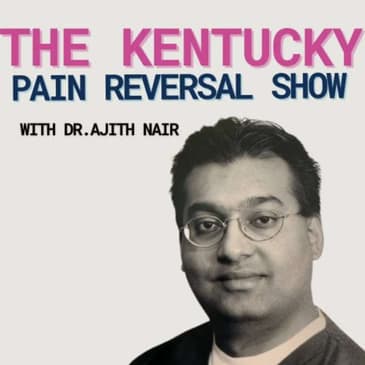
Welcome back to The Kentucky Pain Reversal Show! In today’s episode, pain management expert Dr. Ajith Nair to take an in-depth look at one of the most advanced and often misunderstood, tools in modern pain care: the intrathecal pain pump. After covering the journey of chronic pain from injury to treatment in previous episodes, this conversation pivots to real-world solutions. Dr. Ajith Nair explains how pain pumps work, why delivering medication directly into the spinal fluid is so revolutionary, and what kinds of patients stand to benefit most from this life-changing therapy. If you or a loved one has ever wondered about alternatives to pills and surgery for chronic pain, this episode is full of valuable insights and actionable information.
00:00 Introducing the pain pump topic
04:45 How pain pumps work
06:53 Discussing pain pump trials
10:28 Discussing medication tolerance and delivery
15:09 Preemptive pain management strategy
18:51 Pain pump success stories
21:52 Challenges with pain pump management
25:41 Accessing and managing the catheter
26:45 Patient's recovery and risky behavior
Pain Pump Therapy: Advanced Solutions for Chronic Pain Management
Chronic pain is a multifaceted problem, touching every area of a patient’s life, from mobility to mood, and often resulting in a cycle of medication, invasive treatments, and persistent discomfort. On this episode of The Kentucky Pain Reversal Show, Jamie was joined by Dr. Ajith Nair to address one of the most promising but misunderstood therapies in the modern landscape: the intrathecal pain pump.
What Is an Intrathecal Pain Pump?
The episode began with Dr. Ajith Nair giving a clear breakdown of the intrathecal pain pump a device that delivers pain medication directly into the spinal fluid, bypassing the digestive system entirely. As Dr. Ajith Nair explained, “the pain pump is a device that will deliver pain medication directly into the spinal fluid,” bringing the medication in close contact with the brain and spinal cord where pain receptors are located.
This mechanism allows for a dramatic reduction in medication dose. Instead of flooding the body with oral pain pills and suffering the side effects and diminishing returns due to liver metabolism or poor absorption, the intrathecal pump delivers a targeted dose“ one over 300 of the oral dose”right where it’s needed most.
Is It Right for You? Breaking Down Candidacy
Jamie noted the initial intimidation some patients feel upon hearing the word “implant,” but Dr. Ajith Nair reassured listeners that the procedure is “pretty straightforward”. The pump and catheter are placed just under the skin, and surgery is typically completed within 35 to 40 minutes under general anesthesia. Afterward, most patients return home the same day or the next, with only minor recovery time.
So, who stands to benefit? Dr. Ajith Nair emphasized its role for candidates who have tried and exhausted conservative options such as physical therapy, injections, and surgery, but still face intractable pain. It’s also ideal for patients with certain cancer diagnoses or those with severe injuries, where preemptive management, before pain flares up uncontrollably can make a world of difference.
Additionally, those with chronic conditions such as multiple failed back or neck surgeries, multiple sclerosis, rheumatoid arthritis, or debilitating migraines can benefit, especially when significant amounts of pills or other medications have lost their effectiveness or are causing side effects. “Any condition that causes chronic pain that patients are receiving pain pills for would be a good condition to be treated with a pain pump,” Dr. Ajith Nair summarized.
The Lasting Impact: Less Medication, More Life
One recurring patient sentiment reported by Dr. Ajith Nair: “I wish I knew about the pain pump 10 years ago”. The impact is profound. Patients often move from being housebound and reliant on a complicated regimen of medications to regaining the ability to engage in everyday life playing with grandchildren, participating in hobbies, and simply enjoying daily activities with a new sense of freedom.
A key insight is the difference in medication tolerance. Oral painkillers typically require increasing doses over time, leading to dependence and side effects. In contrast, the pain pump delivers so little medication that side effects are drastically reduced, and tolerance develops significantly more slowly if at all.
The Importance of Skilled Management
Not everyone’s experience is the same, however. Dr. Ajith Nair warned that success with a pain pump depends on careful management and dose titration post-implant. He recounted cases where improper follow-up led to poor outcomes—not because of the device, but due to inadequate adjustments or failure to recognize mechanical issues like catheter dislodgment or blockage.
Conclusion
For Kentuckians and patients everywhere contending with chronic pain, the intrathecal pain pump represents precision medicine at its best: targeting pain with minimal medication and maximum results. “Lower the pills, lower the surgeries, stop the pain”. For many, this advanced therapy could be the answer they didn’t know was possible, until now.
Podcast Website - https://thekentuckypainreversal.com/
Dr. Ajith Nair Clinic - https://kentuckianapainspecialists.com/
Media Partner - https://tophealth.care/